Original to homes from the 1920s-1950s
Neighborhoods built out in Miami’s earlier development decades commonly still run their original cast iron drain lines, sometimes never replaced since the home was built.
24/7 dispatch across Miami-Dade
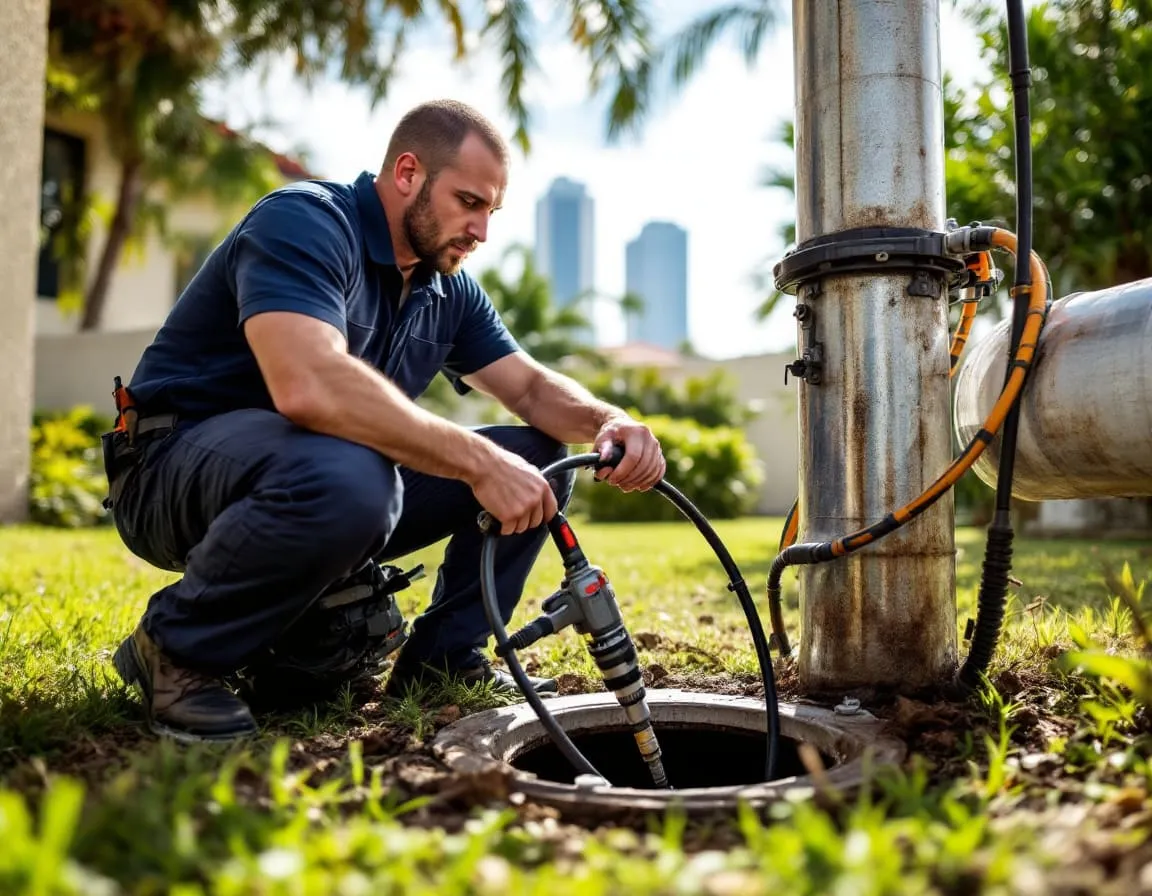
A camera inspection shows exactly where cast iron drain line has scaled, cracked or collapsed, so the fix is sized to what is actually failing, not the whole run by default.
Is my home likely to have cast iron drain lines?
Age and construction era are the first clue. Many homes built in Miami’s older, established neighborhoods from the 1920s through the 1950s were plumbed with cast iron drain, waste and vent lines as the standard material of their time.
Cast iron itself is not the problem -- it was a durable choice for decades. The issue is what happens after seventy or more years of use: the interior of the pipe scales down as minerals and waste buildup narrow the passage, and in the worst spots the iron itself corrodes through.
Running a camera through the line is the dependable way to confirm both what the pipe is made of and the shape it is actually in, rather than treating the whole run the same way just because of the house’s construction year.
That distinction, repair versus full replacement, is exactly what the footage settles, rather than a decision made from the house’s age alone.
What points to cast iron trouble
These point past a simple clog and toward the pipe material.
When the same drain needs clearing more than once in a short stretch, the culprit is often scale coating the inside of the pipe rather than a fresh, isolated blockage.
A toilet or tub that gurgles when a different fixture drains suggests a partially restricted main line, common as cast iron scales down over time.
A crack or corroded joint in an old cast iron line can let sewer gas escape even when water is still draining, slowly, through the same spot.
Can indicate a collapsed section of cast iron drain line below grade, where soil has settled into the pipe’s failure.
Miami’s older housing stock
Cast iron drain line is not a rare find here -- it is expected in certain neighborhoods.
Neighborhoods built out in Miami’s earlier development decades commonly still run their original cast iron drain lines, sometimes never replaced since the home was built.
South Florida’s warm, humid conditions and the mineral content of local groundwater can speed up interior scaling compared to drier climates, which is one reason a fifty-year-old line here may need more attention than the same pipe up north.
Replacing or repairing a section of drain line under a Miami-Dade property typically requires a permit through the local building department -- part of doing the work correctly, not an optional step.
Frequently asked
That depends entirely on what the camera shows. A single failed joint or a short collapsed section can often be repaired without touching the rest of a sound line.
Sometimes, depending on where the failure is and whether a trenchless method fits the layout. We will show you the camera footage and explain the access options before any decision gets made.
Aging cast iron is a plumbing durability issue, not a known health hazard on its own. The concern is failure -- a crack, a collapse, or a blockage -- rather than the material itself.
It depends on the length of the run and how it is accessed. We will give you a specific timeline once the camera inspection is done and the scope is clear.
A slow-draining line under observation can often wait for a scheduled appointment. Active backups, sewage odor indoors, or a sunken yard spot should be looked at sooner.
Ready when you are
There is no charge for the estimate. When a pipe will not stop, call rather than type.