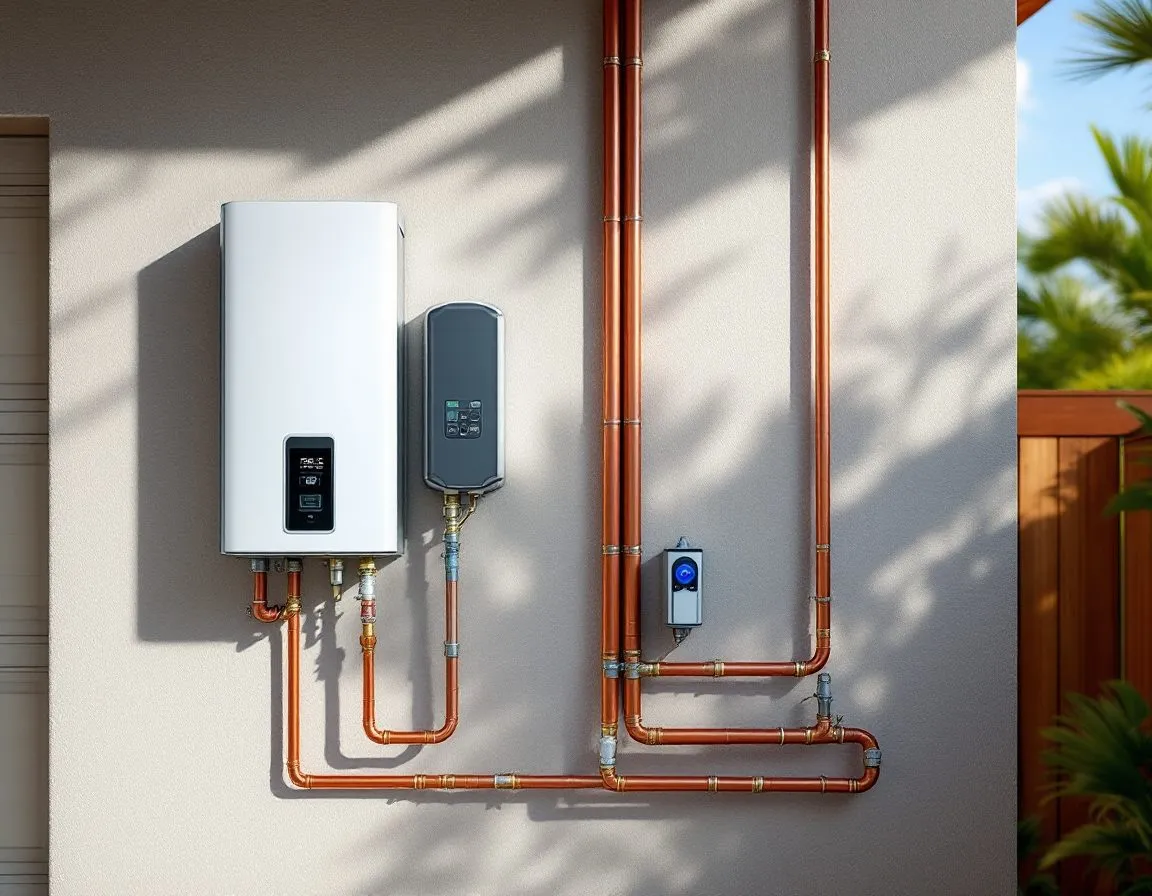
Utility closets are tight
Many Miami condo units keep the water heater in a small interior closet shared with other mechanical equipment, which affects unit size, venting and how the pan and drain are routed.
24/7 dispatch across Miami-Dade
A tank or tankless unit sized to the property, installed with pan, drain line and code-required expansion tank handled, whether it is a house or a condo utility closet.
Should I replace my water heater with a tank or a tankless unit?
It depends on the property more than a general preference. A tank unit is often the simpler swap when an existing tank already has the space, venting and electrical or gas connection in place. A tankless unit takes up less physical space and supplies hot water on demand rather than holding a set volume, which matters more in a tight condo utility closet than in a house with a dedicated garage or laundry room.
Household hot water demand, the existing fuel source, and the physical space available all factor into which one makes sense. That is a conversation worth having on site rather than deciding from a general rule of thumb.
That conversation also covers fuel source and physical space, since a unit that makes sense in a house with a dedicated utility room is not always the right call for a condo closet shared with other equipment.
Signs it is time to replace, not repair
A repair can extend a unit’s life, but these usually point toward replacement instead.
Once the tank shell corrodes through, no repair fixes the tank -- only the connections and components around it can be serviced.
A tank water heater generally lasts eight to twelve years; beyond that window, repairing an aging unit often costs more over time than replacing it.
Sediment collecting inside an aging tank eats into how much usable hot water it can actually hold, one indicator that the unit will not have many good years left.
Both can point to internal tank corrosion or anode rod failure, worth a look before the unit fails outright.
An older unit installed before current requirements may need updated venting or connections that only come with replacement.
Installing in Miami properties
Two things come up on almost every Miami water heater job.
Many Miami condo units keep the water heater in a small interior closet shared with other mechanical equipment, which affects unit size, venting and how the pan and drain are routed.
Water heater replacement in Miami-Dade generally requires a permit and a final inspection through the local building department, part of doing the installation to code.
Miami-Dade’s plumbing code generally requires a thermal expansion tank on a closed water system, a detail worth confirming is actually installed, not skipped, on a replacement.
Frequently asked
A straightforward tank-to-tank swap is often completed in a single visit. A switch to tankless, or a unit in a tight condo closet, can take longer depending on what needs to change.
Yes, both fuel types are installed, matched to what the property already has or converted where that makes sense for the household.
That depends on household size, fixture count and hot water habits. We size it on site rather than defaulting to whatever was there before.
Yes, removal of the old unit is part of the replacement.
In Miami-Dade, water heater replacement typically requires a permit and inspection, which is handled as part of the job.

Ready when you are
There is no charge for the estimate. When a pipe will not stop, call rather than type.