Mature tree roots are a real factor
South Florida’s warm climate supports fast, aggressive root growth from ficus, oak and palm trees, which can find their way into an aging pipe joint over years.
24/7 dispatch across Miami-Dade
The main line from the house to the connection point gets a camera inspection first, so the repair addresses the actual break, root intrusion or offset joint instead of a general guess.
Why does my sewer line keep backing up after I clear it?
If a snake or a plunger clears the immediate clog but the same backup returns within days or weeks, the problem is usually structural, not a one-time blockage. Something in the line itself, a crack, an offset joint, a root that has grown into a seam, keeps catching waste and building the clog back up.
Clearing the surface symptom without addressing the structural cause is why the same call comes back. A camera run through the line shows exactly where the restriction is and what is causing it, which is the only way to know whether the fix is a spot repair or something more involved.
That is also why two backups that look identical on the surface can call for very different fixes once the camera actually gets a look inside the pipe.
What points to a main line issue
Any one of these is worth a camera inspection before more snaking.
When the toilet, the tub and the kitchen sink all slow down around the same time, the shared line downstream of all of them is the likely cause.
The lowest fixture in the house, often a floor drain or basement-level fixture, is typically first to show a main line restriction.
If the same spot needs clearing every few months, something structural is catching debris there, not just an unlucky buildup.
A leaking or collapsed section underground can surface as a soft, soggy or sunken area in the yard above it.
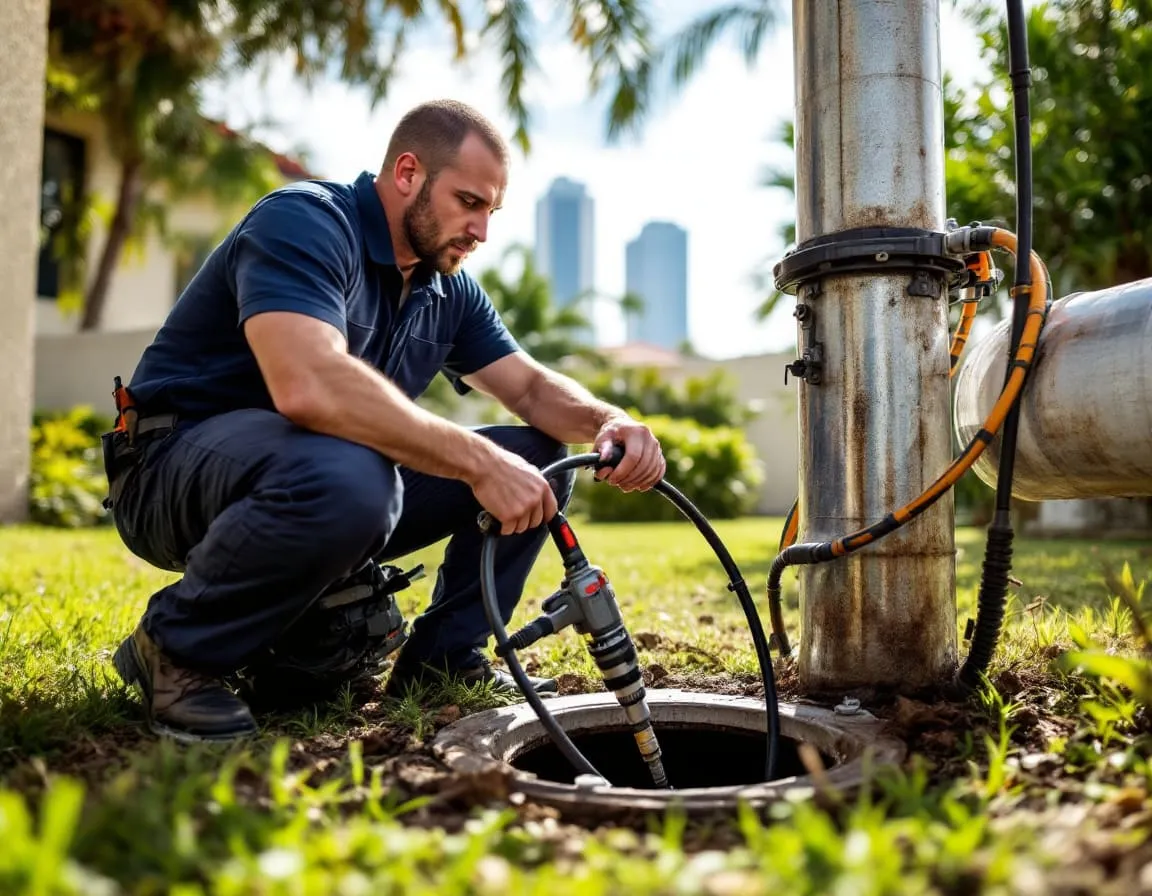
What shapes a sewer repair in Miami
South Florida’s landscaping and Miami’s older infrastructure both play into how a main line repair goes.
South Florida’s warm climate supports fast, aggressive root growth from ficus, oak and palm trees, which can find their way into an aging pipe joint over years.
The property owner is generally responsible for the lateral line from the house to the point where it meets the public sewer system, which Miami-Dade Water and Sewer Department (WASD) maintains from there -- knowing where that line is matters for who handles a given repair.
Homes built decades ago across Miami-Dade may run cast iron or clay sewer laterals, both more prone to root intrusion and joint failure than modern PVC.
Frequently asked
Not always. Depending on what the camera shows and the layout of the property, a trenchless repair method may be possible instead of a full trench dig.
The lateral line from your house to the public sewer connection is typically the property owner’s responsibility. We will help identify where that line ends during the inspection.
The camera inspection shows it directly -- root intrusion has a distinct look on camera, different from a collapsed section, an offset joint, or scale buildup.
Sewer line repair work in Miami-Dade generally requires a permit through the local building department. That process is part of doing the job correctly.

Ready when you are
There is no charge for the estimate. When a pipe will not stop, call rather than type.