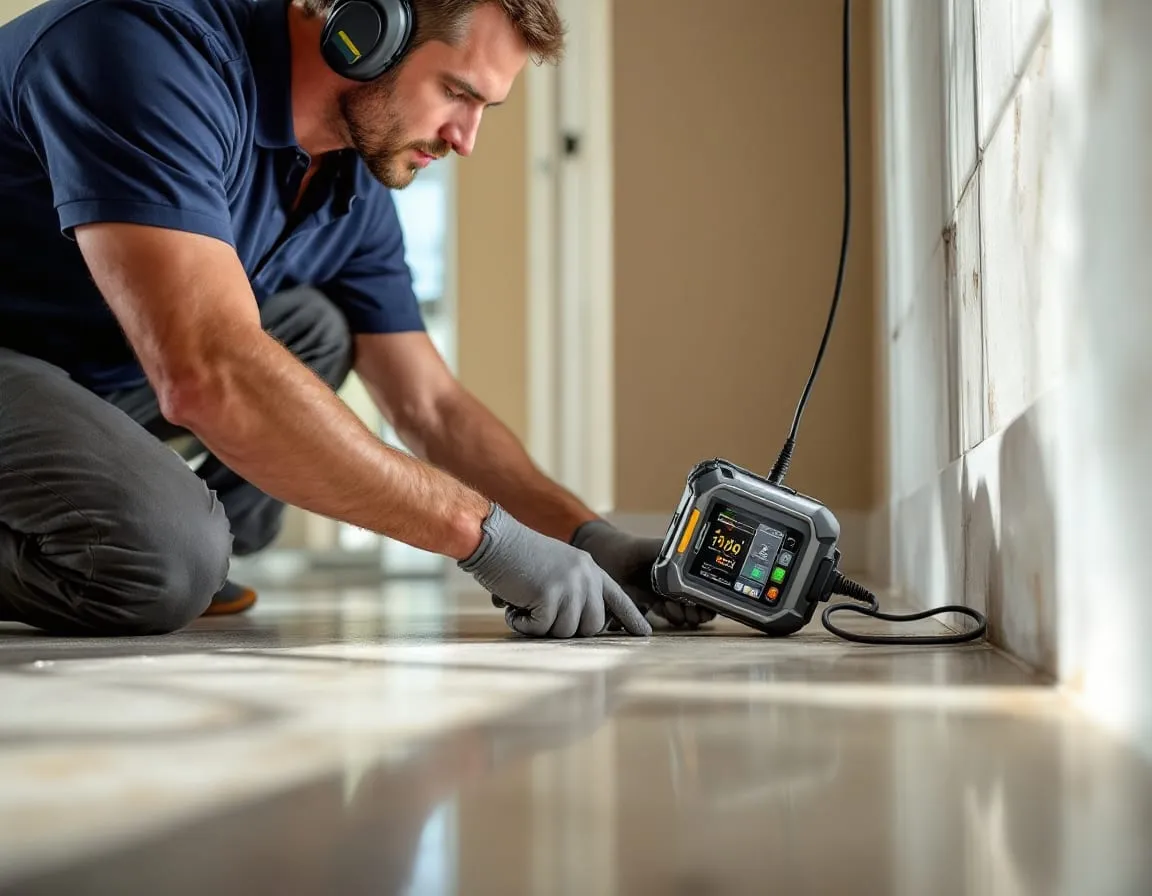
A combination of listening equipment, thermal imaging and pressure testing narrows the search area to a small zone before any tool touches the concrete or drywall. Sound travels along a pipe, and a trained ear with the right equipment can follow it to the point of loudest signal.
Thermal imaging helps confirm a wet zone under tile or slab that water has been sitting in, and a pressure test on an isolated section of line confirms whether the leak is on the hot side, the cold side, or the drain.
None of that replaces a physical access point entirely -- eventually the leak does need to be reached to fix it -- but it turns what could be a demolition job into one deliberate opening.
None of these methods require guessing at a wall or a section of floor to start cutting -- the search happens first, and the opening comes after.