Gas work requires a permit and inspection
Miami-Dade requires a permit and final inspection for gas line work through the local building department, which confirms the line is safe before it is used.
24/7 dispatch across Miami-Dade
A suspected gas leak, a new appliance connection, or a line extension gets handled with pressure testing and permitting, never treated as routine plumbing work.
What should I do if I smell gas in my home?
Leave the property, do not operate any electrical switches on your way out, and call your gas utility’s emergency line from a safe distance before calling a plumber. Gas leaks are a safety issue first, a plumbing issue second.
Once the utility has confirmed the property is safe, a licensed line repair addresses the actual source, whether that is a fitting, an aging line, or a connection at an appliance, followed by a pressure test before anything is used again.
That sequence, safety first, diagnosis second, repair and testing last, is not optional or negotiable on gas work the way it might be discussed for a simple leak somewhere else in the house. Every step exists because the margin for error with gas is genuinely smaller than with a water line, and treating it with anything less than that seriousness is not a shortcut worth taking.
What we handle
Every job on this list is permitted and pressure-tested before it is considered finished.
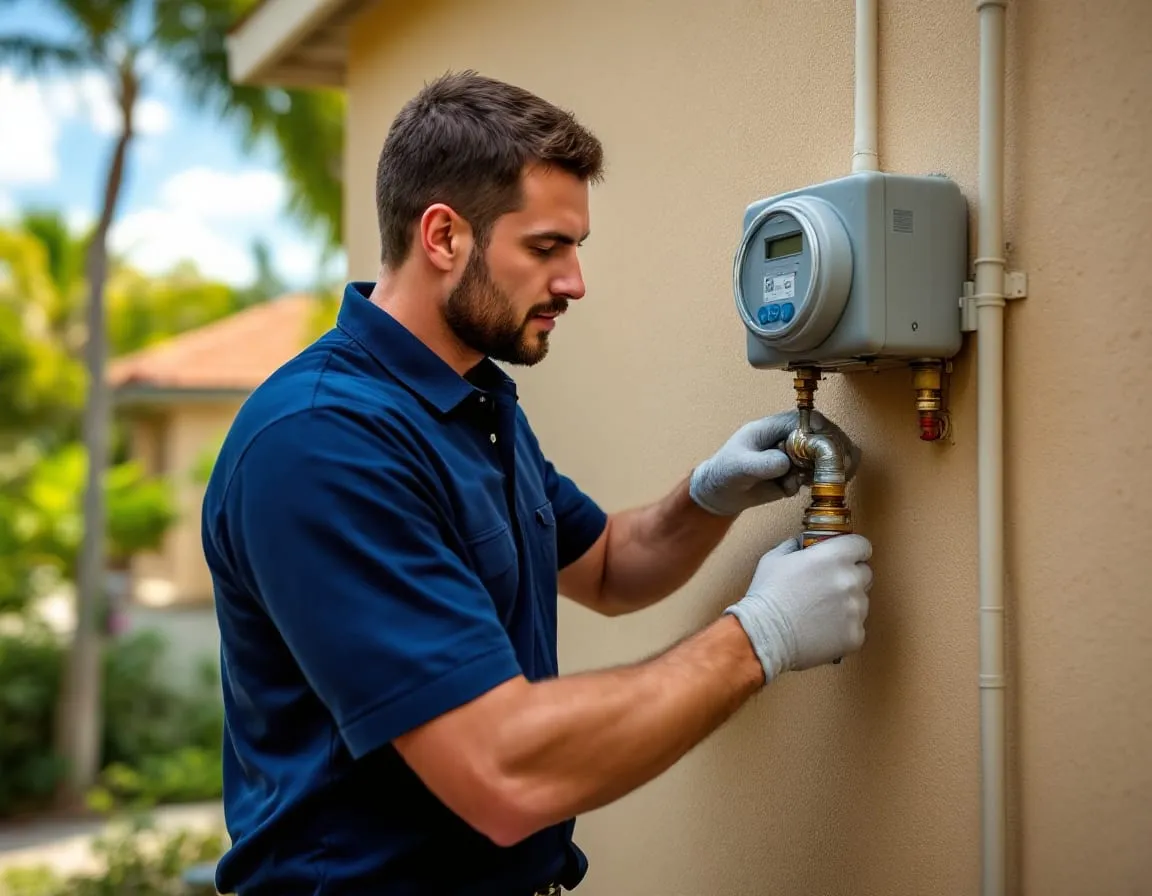
Ranges, dryers, water heaters and outdoor grills connected to code, with the line pressure-tested afterward.
Handled only after the utility has confirmed it is safe to proceed, then repaired and re-tested.
Extending an existing gas line to a new appliance location, permitted through the local building department.
Checked as part of any gas work to confirm the whole system, not just the new connection, is functioning correctly.
A line that has sat unused for years is checked and pressure-tested the same way a new connection would be before anything is put back into service. That step alone rules out a slow leak before it becomes a real problem.
Local factor
Miami-Dade treats gas work with the same seriousness we do.
Miami-Dade requires a permit and final inspection for gas line work through the local building department, which confirms the line is safe before it is used.
Large parts of South Florida run on propane rather than piped natural gas, so a gas line job here often starts with confirming which fuel and tank setup a property actually has before any work begins.
Frequently asked
No amount of gas odor should be treated as normal. If you smell gas anywhere, leave the property and call your utility’s emergency line first.
Yes, both fuel types are handled.
Most standard connections are completed in a single visit, with pressure testing included before the appliance is put into use.
Yes, that is a common request, and it is permitted and pressure-tested the same as any other gas line extension.
Reconnecting a gas appliance is exactly the kind of work that should go through a licensed plumber and, where required, a permit -- a mis-seated connection is not something to guess at.
Once the utility has confirmed the property is safe, dispatch treats a gas line repair as a priority call rather than routine scheduling.
Related
Gas line work often comes up alongside one of these.
Ready when you are
There is no charge for the estimate. When a pipe will not stop, call rather than type.